
Table of Contents
- 1. What Are Waterproof Bottle Labels?
- 2. Best Materials for Waterproof Labels
- 3. Waterproof Labels for Glass Bottles vs Plastic Bottles
- 4. Permanent Adhesive vs Removable Adhesive
- 5. Matte, Glossy, Clear, and White Waterproof Labels
- 6. How to Choose Waterproof Labels for Cosmetics, Drinks, and Food Packaging
Waterproof labels for bottles are a non-negotiable requirement for products that face moisture, condensation, or high-humidity environments. In industries ranging from artisanal beverages to high-end cosmetics, the label is the primary point of contact with the consumer. If the material peels, smudges, or degrades when wet, the brand’s perceived value drops instantly.
At Jumelage, as a specialized China-France joint venture with a 35,000㎡ GMP-certified facility, we engineer every roll to survive the “bucket test.” Understanding waterproof labels for bottles requires an analysis of polymer science and adhesive rheology. This 2026 guide will help you navigate the materials and specifications needed to secure your product’s shelf appeal.
High temperature labels are essential for maintaining traceability in 2026’s extreme industrial environments. In the high-precision world of electronics…
What Are Waterproof Bottle Labels?
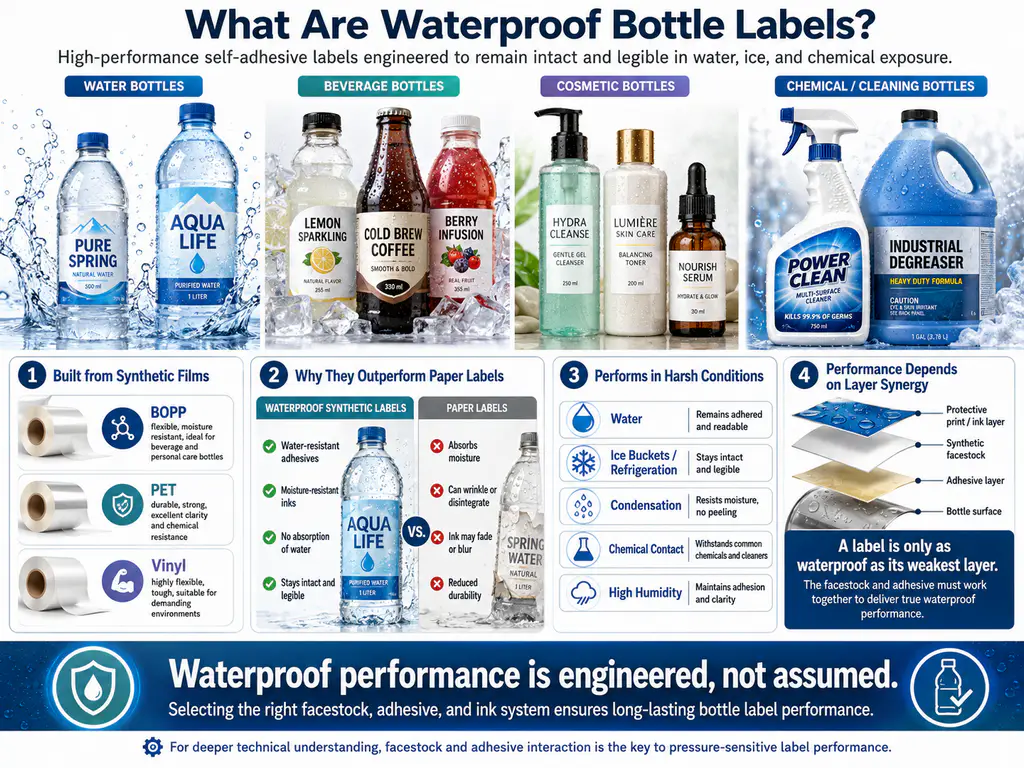
Waterproof labels for bottles are high-performance self-adhesive constructions made from synthetic films like BOPP, PET, or Vinyl. Unlike paper labels, they utilize water-resistant adhesives and inks that do not absorb moisture or disintegrate. This ensures that the label remains intact and legible even after prolonged exposure to water, ice, or chemicals.
The effectiveness of waterproof labels for bottles depends on the synergy between the facestock and the adhesive. A label is only as waterproof as its weakest layer. For technical insights into how these layers interact, see our Pressure-Sensitive Adhesive (PSA) Guide.
Best Materials for Waterproof Labels: Vinyl, PP, PET
When you specify waterproof labels for bottles, your choice of facestock determines the label’s durability and clarity.
- Polypropylene (PP/BOPP): The most cost-effective and popular choice for FMCG products. It offers excellent moisture resistance and high clarity (ideal for the “no-label” look).
- Polyester (PET): The premium choice for industrial and High Temperature Labels. PET provides superior heat resistance and dimensional stability.
- Vinyl (PVC): Known for its extreme flexibility, Vinyl is ideal for contoured bottles. However, it is less common in eco-conscious markets compared to PET.
For pharmaceutical applications that require sterilization, PET is the undisputed leader. Learn more in our GMP Medical Label Guide.
Waterproof Labels for Glass Bottles vs Plastic Bottles
The substrate dictates how you should choose the right custom labels. Surface energy plays a massive role in whether waterproof labels for bottles will stay attached.
- Glass Bottles: Have high surface energy, making them easy to bond with. However, the label must resist condensation (sweating) when moved from a refrigerator to room temperature.
- Plastic Bottles (PE/PP): Have low surface energy. If you use a standard adhesive, the label may “wing” at the edges. You must use a high-tack acrylic adhesive to ensure waterproof labels for bottles maintain a permanent bond on plastic.
For products stored in extreme environments, such as vaccines, refer to our Cold Chain Medical Materials Guide.
This table helps B2B buyers select the correct waterproof labels for bottles based on technical performance.
| Material | Water Resistance | UV Stability | Best For |
|---|---|---|---|
| **BOPP (PP)** | High | Medium | [PSL Beverage Labels] |
| **White PET** | Extreme | High | Industrial/Cosmetic |
| **BPA-Free Thermal** | Medium (Top-coated) | Low | [Shipping/Logistics] |
Permanent Adhesive vs Removable Adhesive
To truly choose the right custom labels, you must define the adhesive’s “end-of-life” behavior.
- Permanent Adhesive: Designed for one-way application. It builds a high bond strength over a dwell time of 24 hours. Attempting to remove it will likely damage the facestock or leave residue.
- Removable Adhesive: Allows for clean removal without residue. This is popular in the wine and craft beer industry, where consumers or recyclers may want to peel the label off after use.
In waterproof labels for bottles, acrylic-based adhesives are superior to rubber-based ones as they do not yellow or lose tack when exposed to moisture. Learn more about the mechanics of pressure-sensitive labeling here.
Matte, Glossy, Clear, and White Waterproof Labels
The finish of your waterproof labels for bottles dictates the brand’s personality:
- Matte Finish: Offers a sophisticated, non-reflective look. Ideal for artisanal foods or premium skincare.
- Glossy Finish: Vibrant and protective. It enhances color saturation and provides an extra layer of moisture protection.
- Clear Labels: Creates the “no-label” look, making the contents of the bottle the star. Requires high-clarity PET or BOPP.
- White Synthetic: The industrial standard. Provides a clean, opaque background for high-contrast barcode printing.
How to Choose Waterproof Labels for Cosmetics, Drinks, and Food Packaging
To choose the right custom labels, you must audit your specific industry requirements:
- Cosmetics: Require resistance to oils and alcohol. A PET facestock with a protective laminate is essential.
- Drinks/Beverages: Must survive the “Ice Bucket Test” for 24+ hours. BOPP with a high-tack permanent adhesive is the standard.
- Food Packaging: Must be FDA/GMP compliant. The adhesive must be low-migration to ensure chemical safety.
At Jumelage, we provide custom material audits to ensure your waterproof labels for bottles meet European REACH and RoHS standards for global export.
FAQ: Common Questions on Waterproof Label Performance
- Are Vinyl Labels Waterproof? Yes, vinyl is naturally waterproof. It is a synthetic plastic material that does not absorb moisture, making it ideal for outdoor and high-moisture labeling applications.
- Are Waterproof Labels Dishwasher Safe? While most high-quality waterproof labels for bottles (specifically PET and PP) can survive a dishwasher cycle, it depends on the adhesive’s heat resistance. We recommend testing your labels at 60°C to ensure the bond remains intact.
Securing Your 2026 Brand Strategy
Answering what is a waterproof label for bottles is about understanding the synergy between polymer science and application. By choosing a manufacturer that integrates French precision with industrial scale, you ensure that your brand remains unshakeable in any environment.
Explore our Complete Catalog of Self-Adhesive Materials or contact our engineering team today for a custom Moisture Resistance Audit.
